How to Raise an Adventure Dog: A Beginner’s Guide to Exploring the Outdoors Together
If you’ve ever dreamed of hiking, camping, or road-tripping with your dog—but aren’t sure where to start—you’re not alone. If you’re preparing to embark on that journey together, we’re here to help with some useful tips and essential dog gear for getting you ready to explore with your dog.
The truth is, adventure dogs aren’t born. They’re built through small, consistent experiences that help your dog grow more confident, calm, and capable outdoors.
Whether your goal is weekend hikes outdoors or just better walks around your neighbourhood, this guide will show you how to safely and successfully get outside with your dog.
Preparing Yourself Before Going Outdoors With Your Dog
- Research parks or trails you plan to visit to confirm they are dog friendly and have your dog ready to go with a proper outfit with a leash, collar and harness.
- Have current ID tags on your dog (with up to date information)
- Know what wildlife you might come across with your planned trip so that you can be prepared with things like bear spray
- Check weather and trail conditions the days leading up to your trip and the day of your trip. Do you need a park pass, is the trail open, what are the weather conditions like?
- Be a responsible dog owner on the trail and respect other hikers. That means picking up after your dog’s poop, keeping your dog on leash and have reliable recall and trail manners in off-leash areas
- Check with your veterinarian to make sure your dog is physically ready to be on outdoor hikes, special consideration for puppies would be having all their shots up to date and not overdoing it in their first year of development
Why Outdoor Adventures Are Important for Dogs
Getting outside isn’t just exercise—it’s essential for your dog’s mental and emotional well-being.
Regular outdoor time helps:
- Reduce anxiety and destructive behaviour
- Build confidence in new environments
- Improve obedience and focus
- Strengthen your bond
Dogs who explore regularly tend to be calmer at home and more adaptable in everyday life. Here’s some tips to help build up to an adventure ready dog!

1. Start Small and Build Confidence
Best for: New dogs, puppies, or dogs new to hiking.
You don’t need to jump into long hikes right away. In fact, doing too much too soon can overwhelm your dog.
Start with:
- Short walks in new environments
- Quiet parks or easy trails
- Gradually increasing distance and difficulty
A good rule of thumb: your dog should finish the outing tired but still happy and engaged.
2. Choose the Right Gear for Safety and Comfort
Having the right gear makes outdoor adventures safer and more enjoyable—for both of you.
Essential Dog Gear for Outdoor Adventures
A Durable Dog Collar
A strong, reliable collar is your foundation. Look for one that can handle water, mud, and rough terrain without wearing out.
Rocky Mountain Dog’s collars are designed for rugged conditions—so you’re not worrying about gear failure mid-adventure.

A Reliable Leash (Hands-Free if Possible)
A standard leash works, but a hands-free leash can be a game-changer for hiking, especially one with a bungee that can absorb pulling. Our all-mountain leashes come in six and eight feet.
Benefits:
- Keeps your hands free for balance
- Reduces pulling strain
- Makes longer hikes more comfortable

Water + Collapsible Dog Bowl
Hydration is critical—especially on warm days or longer hikes.
Always bring:
- More water than you think you need
- A lightweight, packable dog bowl

Waste Bags (Leave No Trace)
Being outdoors means respecting it, always carry poop bags to pack out waste—even on trails.
Other Gear That Will Come In Handy
- First aid kit
- Belt bag to carry a water bottle and treats
- Lightweight dog harness for running or biking
- A dog backpack if you are going camping to carry gear

3. Train for Real-Life Outdoor Situations
You don’t need a perfectly trained dog—but you do need a dog that can handle real-world distractions on busy trails.
Focus on these core commands:
Must-Have Outdoor Dog Skills
- Recall (“Come”) – for safety off-leash areas when you need your dog to come to you
- Leave It – for wildlife, garbage, or unsafe items when your dog is going after something they shouldn’t
- Stay/Wait – for trail crossings, or other people on the trail
- Loose Leash Walking – especially on busy trails where you need your dog to stay close
Practice these in low-distraction environments before taking them outside.
4. Let Your Dog Explore (At Their Pace)
Every dog experiences the outdoors differently, if you are out in nature it’s ok if your dog likes to zig zag instead of walking in a straight line.
Some dogs:
- Sniff everything
- Move slowly
- Need time to adjust
Others:
- Want to run ahead
- Thrive on movement
Both are normal, the goal isn’t speed or distance—it’s helping your dog feel comfortable and confident.
Let them:
- Stop and sniff
- Take breaks
- Move at a natural pace
This builds trust—and a better overall experience.
5. Prepare for Weather and Terrain
When you are outdoors or in mountain conditions, things can change quickly— especially in Canada.
What to Consider Before You Go
- Temperature – Avoid peak heat or extreme cold
- Trail Conditions – Mud, snow, rocky terrain
- Wildlife – Be aware of your surroundings
- Surface Impact – Hot pavement or rough trails can affect paws
On the day of the hike, check the weather conditions and If conditions feel uncomfortable for you, they’re likely uncomfortable for your dog too and it’s ok to change course and go to plan B.

6. Make Outdoor Time a Routine
Consistency is what transforms a regular dog into an adventure dog, makes it more enjoyable for both of you and you get a chance to experience nature together.
Start with:
- Your daily walking routine
- Plan on one truly outdoor outing a week
- Gradually increasing length and difficulty
Over time, you’ll notice:
- Better behaviour on walks
- More confidence in new environments
- A stronger bond between you and your dog
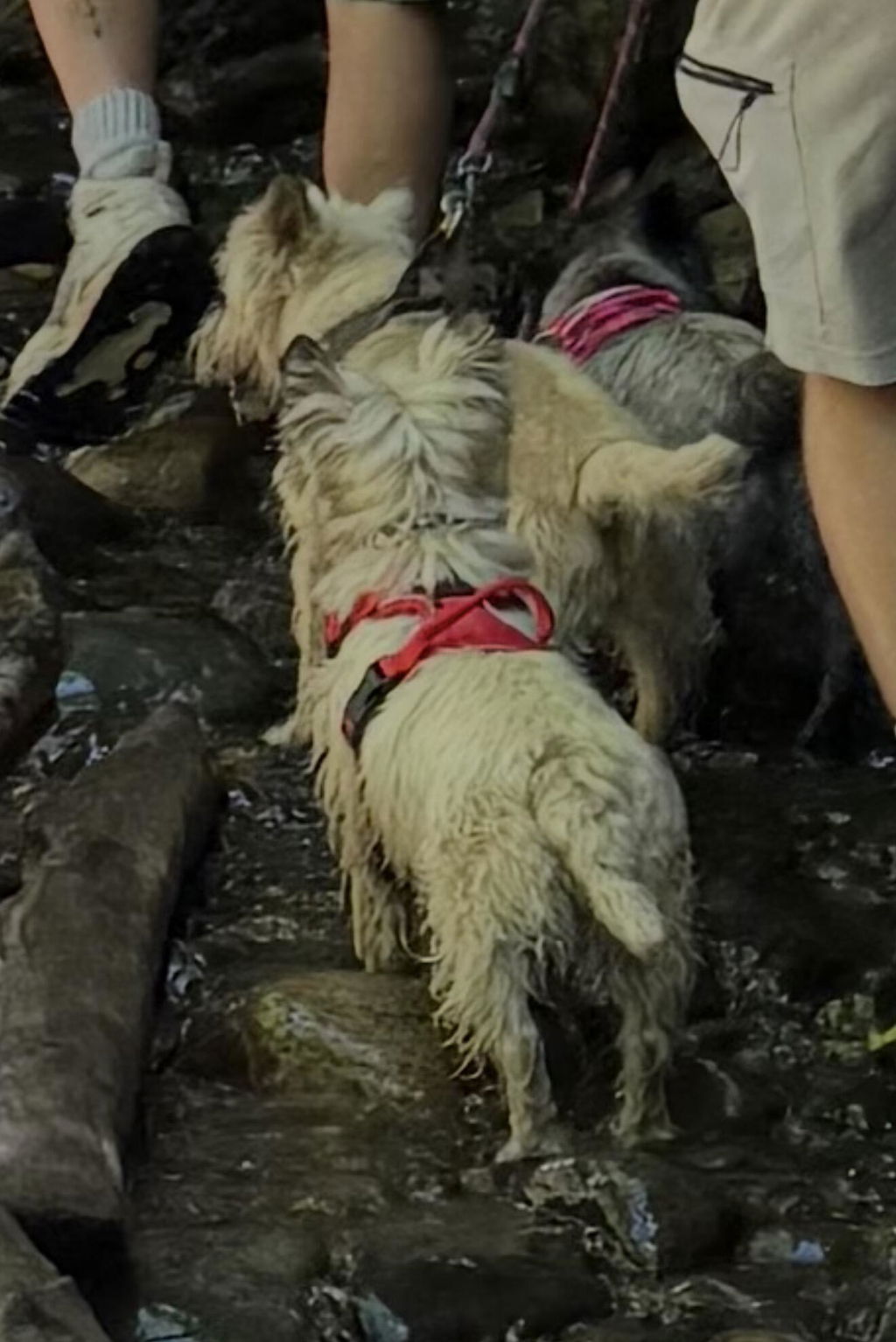
7. Expect A Mess— And Embrace It
Adventure dogs get dirty, especially in spring and fall when the weather, rain and more mud is part of the routine.
Mud, water, dust—it comes with the territory.
Instead of avoiding it, prepare for it:
- Bring a towel in your car and some wipes for after the hike
- Choose gear built for rugged use
- Focus on the experience, not the cleanup
The best adventures usually end with a tired, slightly messy dog—and that’s a good thing.
Common Mistakes to Avoid
- Don’t over do it with puppies or if you are just starting out, it’s ok to build up your stamina
- Forgetting water, always have it on you
- Forgetting bear spray, we always have a container in our backpack
- Using low-quality gear that breaks outdoors
- Letting dogs off-leash before they’re ready or places not allowed
- Ignoring signs of fatigue or stress with your dog
Final Thoughts: Just start
All you need to do is start your adventures with your dog, the experiences you will have together will be a truly bonding experience, remember:
- You don’t always need to be with someone, there are often many people on the trail where you are going
- If you are prepared, it’s ok to see wildlife on the trail
- You don’t have to go far, there are often many outdoor trails even in your city
Ready to Get Outside?
At Rocky Mountain Dog, we design gear built for real adventures—whether that’s a weekend hike or your daily walk. Start small, stay consistent and enjoy the process.
Our mission is to inspire others to explore the outdoors with their dog, making a lifetime of memories along the way. The best adventures don’t have to always be the biggest—they’re the ones you share with your dog.